The South Fork San Joaquin runs freely to Florence Lake,
but once
impounded in Florence Lake it’s considered the
“Hardest Working Water in the World”. Encompassing
eight lakes, five forebays, nine powerhouses and three tunnels, Big
Creek Hydroelectric Project is the largest in California. Construction
began in 1912 and the last powerhouse at Balsam Meadow, built in 1987,
is 1,000 feet underground and carved from solid granite. With such a
massive project using all the water, it’s no surprise the
river escaped descent for so many years.
There are several gauges on the river, but Southern
California Edison
withholds all information from the public. Both times I had paddled the
Middle Fork San Joaquin, the South Fork was already at fish flows. How
to run a river with no water?
"In the 24 years that have passed since Royal Robbins,
Doug Tompkins,
Newsome Holms, and Reg Lake's landmark first descent of the Middle San
Joaquin, its sibling river the South Fork has been in the collective
conscious of California's whitewater expedition elite. To further fuel
the speculation over this run, it's upper reaches were included in the
Holbek/Stanley guide as a spectacular run that only gets "harder and
more fun" the further you go down stream to a point where either a Heli
flight out or a massive hike out is necessary.” –
Ben
Stookesberry
Late in August 2008,
American
Whitewater volunteer
Paul Martzen caught wind of water being released into the South Fork
San Joaquin via Mono Creek. For reasons we weren’t sure of,
they needed to move more water downstream than could be put through the
powerhouses, and would be releasing 500cfs into Mono Creek, an un-run
tributary of the river.
The release would be on Labor Day weekend, with flows
“expected but not guaranteed”. Once I heard the
news I called Ben Stookesberry, leaving vague message about the
release. The message was forgotten as we planned to enjoy the Fordyce
release that would happen at the same time and was a sure thing.
The San Joaquin drainage, where flows
are never a sure thing.
Mammoth resident Kevin Smith had the run on his radar too,
and on
Wednesday we chatted about the possibility of it, but I said we were
out because I hadn’t heard from anyone and we all had work on
Friday. While hiking into the beautiful Heart Lake outside of Mt
Shasta, I was suddenly talking to Ben again, who was dropping lines
like “once in a lifetime” and “this is
what we do”. Fueled by his motivation I called one of my
favorite kayaking partners,
Matt
Thomas, who said he could get
the day off work and was in too. I followed that up with a quick call
to Kevin confirming that it was a go and there would
“probably” be water for four days.
Matt was planning on Fordyce and would have to drive home
and pack his
gear before heading down from Southern Oregon. This put our eventual
departure time at nine pm, a late start for such a long drive. Knowing
it was going to be a slog, we piled into Ben’s Subaru and
drove all night, stopping for two hours of sleep at four in the morning.
As we pulled into the Mammoth Pool boat ramp at seven in
the morning,
we were all relived to see that Kevin had made the big night drive and
was there on time. With no time to waste we piled into one car and
embarked on the four hour shuttle.
Wilderness runs require wilderness
permits, so we made a quick stop to
get our permit and a better topo at the ranger station.
Several miles and no wrong turns
later, thanks to map master
Kevin Smith, we were at the put-in for Mono Creek.
Mono Creek is a small tributary, and with 500cfs it was swollen past
the banks. From the maps we knew that in the first half mile the creek
would drop away at four hundred feet per mile. We planned for one big
portage until we were far enough down to switch to the right side and
find the trail. Plan on three days, but pack for four was our motto.
Most of my
provisions were either left over from the spring or bought at a gas
station the night before.
Trying not to forget anything after
two
months off the water and two hours of sleep!
Initially a closed road on the left followed Mono Creek,
but after
several hundred yards it continued to hold elevation and veer away from
the creek, which was already out of sight. Ready to see some water, we
dropped straight to the creek.
It was still steep, too steep for the high water level. We
put in, ran
one rapid and started scrambling into the available eddies, because the
river didn’t stop and had lots of wood. We made one fast
portage and it looked possible to run a little ways and catch an eddy
far downstream on the right. Then we would find the trail and keep
hiking.
Ben Stookesberry on Mono Creek.
From far above it looked like Ben was right on line for
the eddy, but
as he made the final move, a hidden hole type-writered him to the left
side of the river, and far, far away from the destined eddy. As he
disappeared around the corner we tried to rush down the banks, but the
rugged terrain made rushing impossible. Instead we climbed up to get a
higher vantage point, and saw Ben on shore with his boat and ok,
thankfully he found an eddy above more log jams. We spent a few minutes
debating our options, but it was obvious the only safe thing to do was
go up and around.
Matt Thomas and the author going over
and around.
Every time we looked at the river the lack of eddies and
abundance of
wood kept us high on the ridgeline, until the ridge eventually dropped
to the river near a cabin and footbridge. There were still a few
portages around boulder piles, but we made quick work down most of the
creek that Ben said was “a mini North Fork Payette”.
Ben Stookesberry runs a rapid on the
mini NF Payette, Mono Creek.
Once at the confluence our attention was focused on
assessing the flow.
The guidebook recommended 1,200cfs for the run leading into the
unknown, and 500cfs was far cry, but the river canalized well and we
made quick work of the fun rapids, until after many quick miles and one
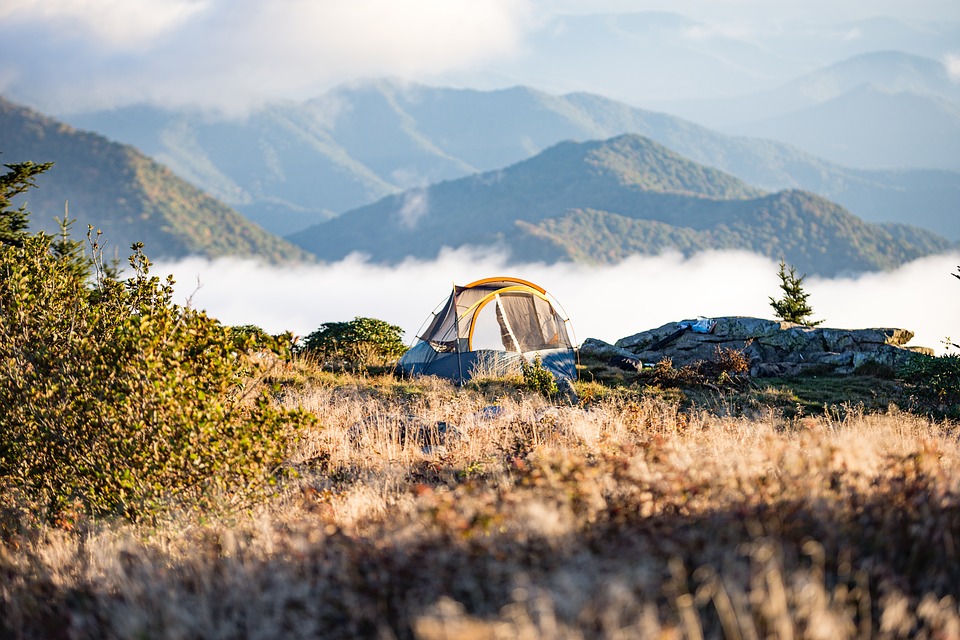
or two portages we pulled out on the right and setup a nice campsite.
Sausage time, Matt Thomas enjoying his
first night on the South Fork
San Joaquin.
Over the campfire we discussed the mileage we had made,
and although we
wanted to have more behind us, we had done well for putting in at 1pm
and finding Mono Creek more demanding than expected. From camp it was
obvious the next day would be full of action, and we crashed out early
to catch up on sleep.